


Feedback/advice on 3D printing
So, I use both FDM and resin.
FDM is more for scenery (the tray is generally larger than resin).
Resin is for figurines.
It's important to know that both techniques are more or less toxic (micro-particles of plastic or resin = not good for your health). It's therefore best to use a well-ventilated room for this.
Another issue is the outside temperature.
For FDM with PLA, there is not too much of a problem (some materials such as carbon require a chamber and a constant temperature above 20°C).
For resin, it is better to be above 20°C. I also print in winter in my garage at 16°C, but specific adjustments have to be made: slower and longer printing times.
FDM takes about three times longer for the same print. For example, a 60 mm Minotaur will take 2 to 3 hours in resin and 6 to 8 hours in FDM.
With FDM, you print and then paint straight away.
I have an Ankermake that I am selling, which has just been repaired with parts from the manufacturer and is under warranty until January 2026. It is an Anker Make M5C = 280€ (including: new 0.4mm nozzle head block, new USB-C cable, 7 new 0.2mm nozzles, spare parts: new bearings and new belts. Value of the new set = 520€).
Otherwise, Bambulab makes good FDM printers.
For resin, you print, then soak it in alcohol to degrease it at >90° (I use 95° household alcohol from the supermarket, which smells stronger than the resin), see 1 wash for pre-washing, then remove the supports, then a second wash. There are machines that clean (and dry) automatically, but I do it in an airtight plastic box. Then you dry the print, otherwise there will be white deposits (hair dryer, fan, airbrushes, air gun). Finally, cure the print with UV light for 15 minutes on one side, then 15 minutes on the other (UV machine, UV lamp in a trash can, sunlight).
For the resin, it depends on your budget. A few years ago, I chose the most reliable and least expensive option, an Elegoo Mars 2 for 160€. Here are some resin models that offer good value for money (there are YouTube videos showing tests):
. Elegoo Mars 2 printer sale
. ELEGOO Mars 4 Ultra 9K printer sale
. ANYCUBIC Photon Mono M7 PRO 14K printer sale
. Phrozen Sonic Mini 8K printer sale
. ELEGOO Saturn 4 12K printer sale
Hmm, one last thing about resin: the larger the tray, the more resin you need in the tank, so printing small quantities/sizes is not convenient, and you need space to handle a large printing tray, large tanks, and a large washing/drying machine.
There you go, I think I've covered everything.
Photogrammetry: Photogrammetry software guide FR
For supports, only use thin ones and a few medium ones in the heaviest/thickest areas for a part <50mm.
If this is not sufficient, reduce the size of the support tips.
After that, it also depends on the specific settings for the resin, so you need to find the right parameters, which may be slightly different from those recommended by the manufacturer. Here are some examples of the parameters I use:
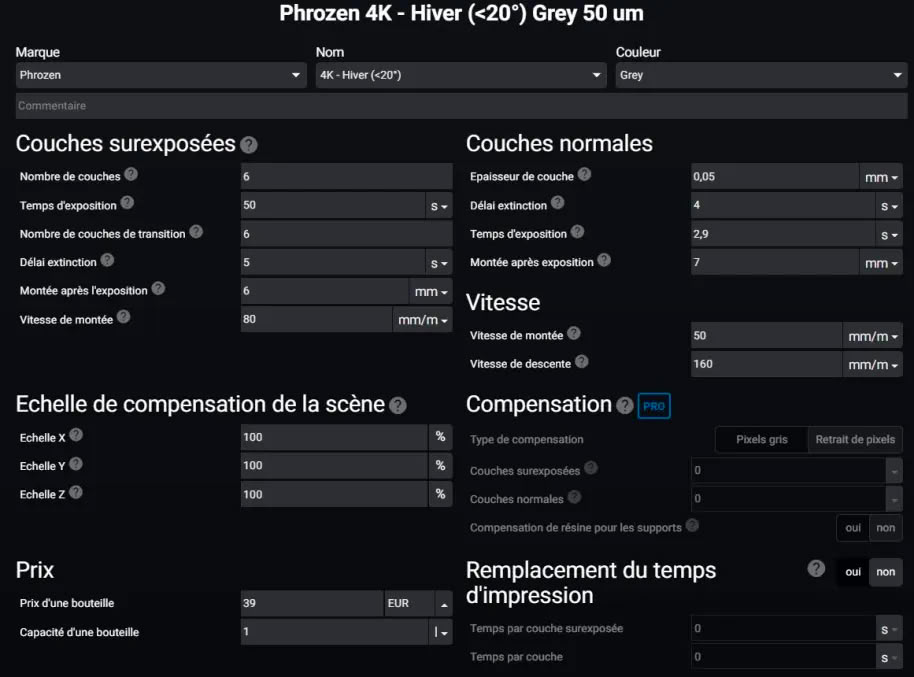
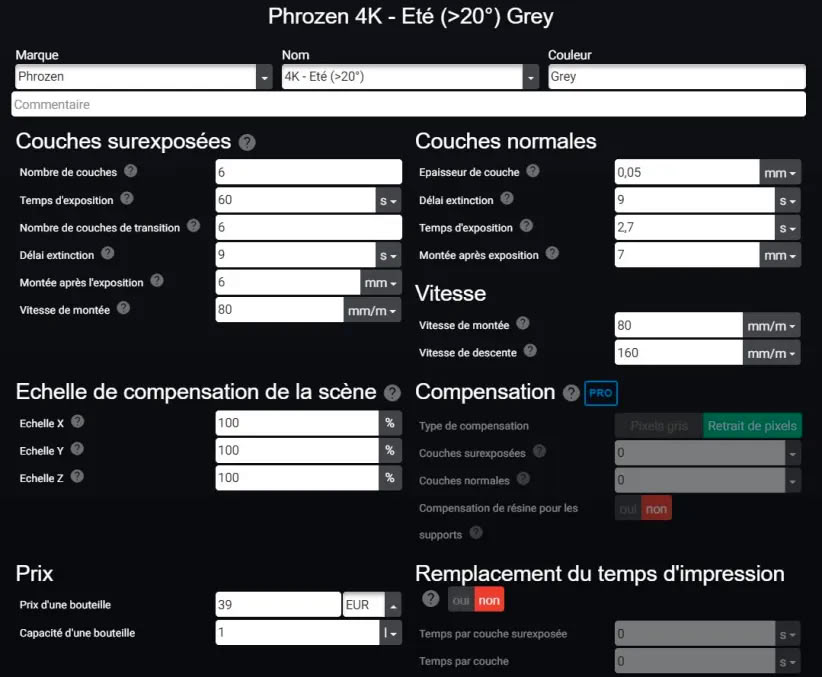

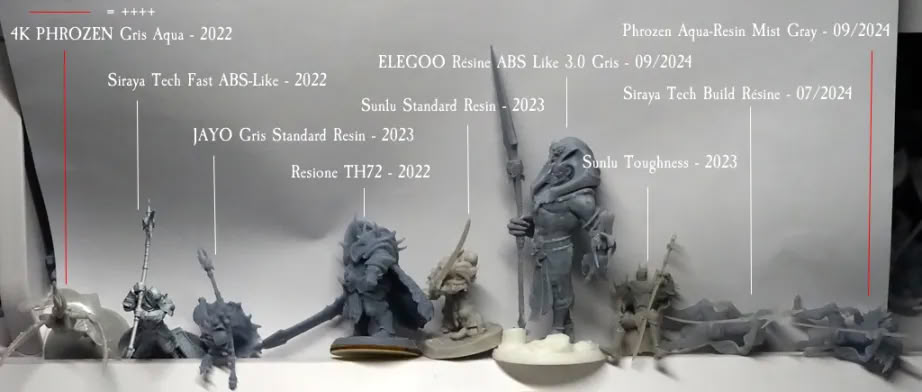
The problem is quality over time. I have tested the following resins, and the best one is Phrozen (to which I add 10% Sunlu or TH72 for flexibility):
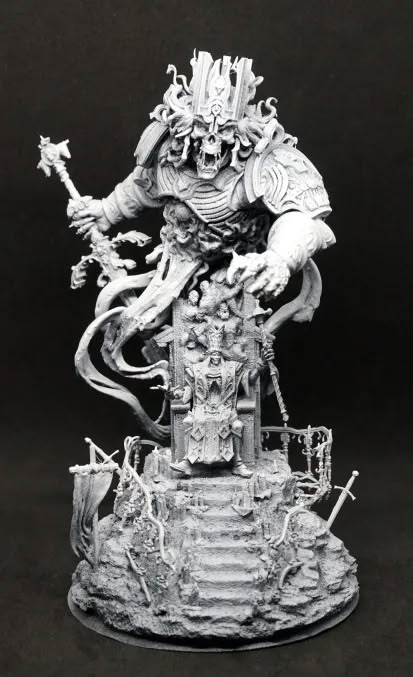
Here is the 3D print of my Sophet proxy in warrior and mage versions (the base is made of PLA Wanaho and the elemental, Sophet, the candles, weapons, banner, and barricades are made of Phrozen 8K resin):
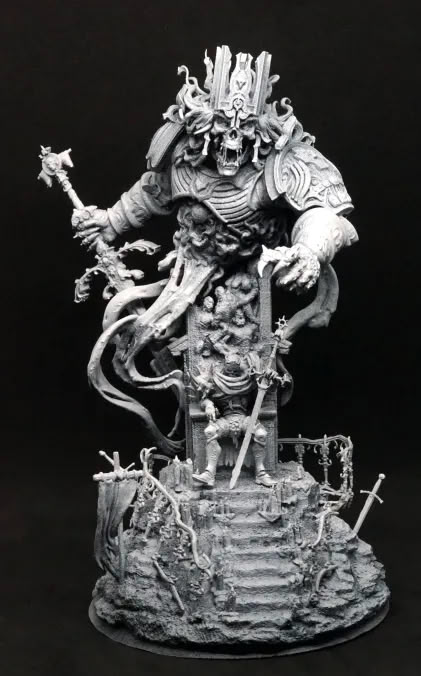
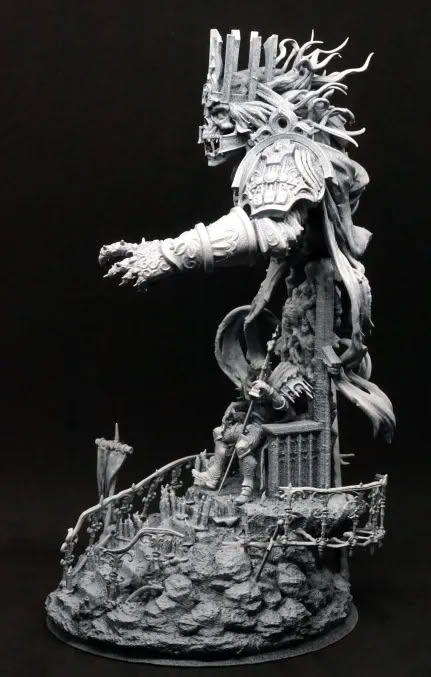
Any advice for getting started with 3D printing?
The problem is that resin is suitable for figurines but less so for DIY projects.
The problem is that basic resins (under 50$/liter) may be flexible but lack the strength needed for DIY projects. The last one I bought (Resione TH-WW) allows the figurine to withstand a fall from a height of 70 cm, but I haven't tried repeating the operation on the same figurine. This is possible by adjusting the flexibility of the resin. When it comes to mechanical strength, it's a different story. You need to use special resins for this, and they don't come cheap.
That's why, in general, FDM printers are used for scenery/costumes/DIY projects with plastic filaments of varying degrees of resistance (certain fibers are used to make them resistant, such as carbon, but be careful, some filaments cannot withstand temperature variations during printing and therefore require a printer with a box).
Then again, it also depends on your budget.
I have both: an Elegoo Mars 2 resin printer (the cheapest one, which I paid 160€ for) and a Bambu A1 FDM (290€ on sale) and an Ankermake that I no longer use, which I'm selling for 280€ excluding shipping (with repair accessories—belts and wheels—and a new nozzle to replace the old one).
In general, the best resin printers are: Eleggo Mars 4 DLP, Elegoo Mars 4, Elegoo Mars 4 Ultra, Elegoo Saturn 4 (note that the Saturn has a large build plate, which is difficult to handle and requires using almost 1 liter of resin in the tank per print, whereas a Mars 2 only requires 200 cl of resin in the tank per print).
For FDM printers: Bambu printers are plug and play and currently the best on the market, followed by other brands (see YouTube tests, but avoid sponsored ones as they are not objective).
For resin, you will need post-production/cleaning equipment: spatula, 95°/isopropyl alcohol, nitrile gloves, mask, goggles, trays or washing system, sun or UV lamp or drying system, spare FEP/ACF/PFA film when worn, ventilated work area. Resin is highly toxic; 10 seconds on the skin causes it to turn pink and itch/heat up. In terms of fumes, it is not healthy.
For FDM, PLA filaments are No-toxic because they are vegetable-based, but other filaments are toxic and therefore need to be ventilated. You will need a product to remove grease left by your fingers on the tray when removing parts, and W40 spray to oil the mechanical parts every 2 to 3 months.
For both types of printer, you will need plastic cutting pliers to remove the supports and a modeler's file.
For information, how much does it cost to print a 28mm figure (such as a pedestrian) in good quality?
On forg3d, between 5€ and 15€, depending on the model, excluding shipping costs.
There is a price list at 3DMF FR: 3D printing prices for miniatures
Which 3D filament should you choose for FDM printing?
- PLA: easy to print, biodegradable, ideal for beginners.
- ABS: more resistant but more demanding (shrinkage, odors).
- PETG: a good compromise between strength and ease of printing.
- Nylon is resistant to wear and tear.
- Polycarbonate withstands high temperatures.
- ASA is perfect for outdoor use thanks to its UV resistance.
| Criteria | PLA | PLA+ | ABS | PETG |
|---|---|---|---|---|
| Ease of printing | ⭐⭐⭐⭐⭐ | ⭐⭐⭐⭐ | ⭐⭐⭐ | ⭐⭐⭐ |
| Common applications | Prototypes, decorations, toys | Everyday objects, prototypes, tools | Technical parts, robust, tools | Household objects, design, and food packaging |
| Extrusion temperature | 190–210°C | 200–220°C | 220–250°C | 230–250°C |
| Tray temperature | 0–60°C | 50–60°C | 90–110°C | 70–90°C |
| Recommended closed box | No | No | Yes | Ideal but not mandatory |
| Mechanical strength | ⭐ | ⭐⭐ | ⭐⭐⭐ | ⭐⭐⭐ |
| Heat resistance | ⭐ (60°C) | ⭐⭐ (70°C) | ⭐⭐⭐⭐ (100°C) | ⭐⭐⭐ (80°C) |
| Impact resistance | ⭐⭐ | ⭐⭐⭐ | ⭐⭐⭐⭐ | ⭐⭐⭐⭐ |
| Resistance to humidity | ⭐⭐ | ⭐⭐ | ⭐⭐ | ⭐⭐⭐ |
| UV resistance | ⭐ | ⭐⭐ | ⭐ | ⭐⭐ |
| Surface appearance | Shiny, smooth | Shiny, smooth | Matte, slightly grainy | Slightly shiny, smooth |
| Print odors | None or very slight | None or very slight | Strong (possible harmful fumes) | Low |
Technical materials (Nylon, Polycarbonate, ASA, PC-ABS…)
| Criteria | Nylon | PC (Polycarbonate) | PC-ABS | ASA |
|---|---|---|---|---|
| Ease of printing | ⭐⭐ | ⭐⭐ | ⭐⭐ | ⭐⭐⭐ |
| Common applications | Mechanical parts, gears, hinges | Structural and technical components | Cases, housings, technical parts | Exterior parts, covers, signage |
| Extrusion temperature | 240–270°C | 260–310°C | 250–270°C | 240–260°C |
| Tray temperature | 70–100°C | 100–120°C | 90–110°C | 90–110°C |
| Recommended closed box | Yes | Yes | Yes | Ideal for dimensional stability |
| Mechanical strength | ⭐⭐⭐⭐ | ⭐⭐⭐⭐⭐ | ⭐⭐⭐⭐ | ⭐⭐⭐ |
| Heat resistance | ⭐⭐⭐ (90°C) | ⭐⭐⭐⭐ (110°C) | ⭐⭐⭐⭐ (100°C) | ⭐⭐⭐ (90°C) |
| Impact resistance | ⭐⭐⭐⭐ | ⭐⭐⭐⭐⭐ | ⭐⭐⭐⭐ | ⭐⭐⭐ |
| Resistance to humidity | ⭐ | ⭐⭐ | ⭐⭐ | ⭐⭐⭐ |
| UV resistance | ⭐ | ⭐⭐ | ⭐⭐ | ⭐⭐⭐⭐ |
| Hygroscopic (absorbs water) | Yes, very strongly | Yes, moderately | Yes, moderately | Little |
| Storage difficulty | High (requires dry box)) | Average | Average | Low |
Composite materials (PA-CF, PA-GF, ABS-CF, PET-CF…)
These materials are reforzed with fibers (carbon, fiberglass, etc.) to improve rigidity and mechanical strength. They are used in industrial or functional applications and often require a reinforced nozzle.
| Criteria | Carbon fiber | Fiberglass |
|---|---|---|
| Ease of printing | ⭐ | ⭐⭐ |
| Common applications | Robotics, drones, automobiles | Tools, covers, technical parts |
| Rigidity | ⭐⭐⭐⭐⭐ | ⭐⭐⭐⭐ |
| Mechanical strength | ⭐⭐⭐⭐⭐ | ⭐⭐⭐⭐ |
| Heat resistance | ⭐⭐⭐⭐ | ⭐⭐⭐ |
| Impact resistance | ⭐⭐⭐⭐ | ⭐⭐⭐⭐⭐ |
| Weight | ⭐⭐⭐⭐⭐ Light | ⭐⭐⭐ |
| Abrasion resistance | ⭐⭐⭐ Requires reinforced nozzle | ⭐⭐⭐⭐ Requires reinforced nozzle |
| Risks of warping | Present, according to the matrix | Similar, often more stable |
| Cost | High | Average |
I’m printing some things right now, and they’re literally falling apart. They break either during printing or when I try to peel them off. I’m using 100% infill PLA. Do you have any idea why this is happening?
Well, there are several reasons why a resin or FDM print might fail:
. Poor-quality 3D model design (presence of holes, poor mesh, walls that are too thin, etc.). In Lychee Slicer or BambuStudio, holes are detected and a repair suggestion is provided. Otherwise, there are other software programs or websites you can use to repair the structure of 3D files. Remeshing is a feature available in 3D design software,
. The supports are not good, there aren’t enough of them, or they aren’t placed in the right spots. A structure in mid-air will inevitably break down—this is a matter of basic mechanics and gravity. For 3D printing, there should be no more than 3 to 5 mm of unsupported space,
. The ambient temperature is too cold. With resin, you must print at a temperature above 20°C; below that, do not go below 15°C, store the resin bottles in a warm room, slow down the print speed, and increase the exposure time of the layers according to the recommendations of the manufacturer of the resin used. With FDM, a cold draft can weaken the print; this is generally most problematic with sensitive materials (see materials table and recommendations). In FDM printing, a flow of cold air can weaken the print; this is generally most problematic with sensitive materials (see the table above for the different types of filament). The solution is to use a closed printer or an isolating tent/box. Note that some filaments are highly sensitive to humidity; they absorb humidity, which can alter their thickness and structure, causing printing issues. In a garage, the ambient temperature can drop to 10°C and the humidity level can rise to 70%, as is the case in mine. The filament must be stored in a warm, dry place,
. A print speed that is not adapted to the resin or FDM filament. In FDM, a nozzle temperature that is too low or too high,
. Resin or FDM printers don't really handle vertical structures well; tilting the 3D model by 30° to 45° and adding supports may solve the printing problem.
How to smooth an FDM print?
Solutions with varying degrees of effectiveness:
. Sanding with sandpaper of varying grits (but results in loss of detail),
. A mixture of white glue and multi-purpose hole-filling putty applied with a brush (but results in loss of detail),
. Apply a coat of UV resin with a brush and let it dry in the sun or under a UV lamp (15 minutes per side),
. Use ABS/ASA/PC and let it sit for 30 minutes to 3 hours in an airtight container with a piece of paper soaked in acetone),
. Print at a 45° angle (or a different angle) to avoid printing vertical sections, which makes the layers less visible,
. Set the layer resolution to the highest possible setting based on the nozzle (this increases print time),
. Print at a slower speed (this increases print time),
. Use a 0.2 mm nozzle instead of a 0.4 mm nozzle (this increases print time),
. Use higher-quality filament,
. Increase the nozzle temperature (this may be combined with using a tent to prevent drafts and heat loss),
. Use the “Variable Layer Height” feature, which will create progressively thinner layers toward the top of the print (on Bambu Studio: Adaptive Layer Height).